
🔭 ✨Boring Astronomy: Visibility ✨🔭
Behind the Scenes of the Science of the Cosmos
I am Alessandro. I have been in astronomy since 2003.
If you are eager to have a playful attitude towards astronomy; you want to grow your interest in this science and you want to know how astronomy works “behind the scenes”, this is the place for you.
I am planning on sending this Newsletter every Sunday.
Mistakes will be made; I count on your feedback to make this newsletter a better place and provide you with increasingly better content.
You can follow my vlog on TikTok or my YouTube Channel .
You can find Boring Astronomy’s material on Etsy.
📰 This week in Astronomy
“Visibility” is a word with a lot of confusing meanings in astronomy. It is the contrast of fringes in interferometry and the height of a source above the horizon. It is also what you think a regional meeting of the International Astronomical Union would have and it is what human activity in space would not have.
Last night, something of extreme gravity happened and I do not think received enough visibility: the students of the University of São Paulo, who were occupying the university have been assaulted and arrested by the police. This is in the framework of a students’ strike which has been going on for more than two weeks.
A strike is the worker’s most sacred instrument: it creates trouble because the worker does not work and, in exchange, the worker looses a day of salary. This is why normally the strikes of scientists are invisible: we do not affect anyone. But the students decided to block the activities of the University. Responding with the use of the police is unacceptable.
A University is a temple of knowledge and the presence of police feels blasphemous. My most sincere sympathy to the students who had to suffer this outrage.
Asia Pacific Regional International Astronomical Union Meeting (APRIM) 2006
The “APRIM” 2026 was hosted at the Hong Kong Convention Centre. The scientific program was exciting and the invited speakers were the top of the top.
Yet, on my social media feed there was radio silence.
Remember that the Pacific area has countries like Japan, Australia, South Korea, and the US. It feels awkward that so few news come out of this meeting. If you have news from it, please, share.
Planets in the Solar System
The Solar System keeps surprising us. Here is an interesting discovery about a body “far far away”: The first detection of an atmosphere on a trans-Neptunian object beyond Pluto
Somehow, the name “Pluto” has resurfaced in the past week. Apparently, the Administrator of NASA is “making the papers” to reinstate Pluto as a planet. It is important to remember that the “Pluto business” was never about Pluto but about the definition of planet in the Solar System because new objects (e.g. Makemake) had just been discovered. People should be serious when addressing this topic.
Advices to (Very) Early Career Researchers
Getting in a graduate program is not easy. Some friction is not unwelcome, it makes people work on both sides, the applicant and the reviewer. Yet, there is a lot of friction which is just pointless. In my day, I applied for 9 graduate programs, so I know what I am talking about.
In a good effort, here is an interesting read for people managing the admission to graduate programs: Recommendations for the Astronomy Graduate Admissions Process
It is focused on US programs but it can easily translated to other realities.
Regulating Space Exploration?
“Space, the final frontier” is one of the mantras of sci-fi fans. When humans have identified “frontiers” (the discovery of America, the Far West, the Colonisation of Africa), we have not shown any sign of respect for anything or anyone.
Somehow, this started to change with the approach to Antarctica which has been, recently, mostly treated as a scientific and natural reserve. Space is regulated by a similar international treaty. In a situation where international law is hardly respected, the fear of abusing space is real.
Here is a paper providing a status of the legal context for the access to space:
The Outer Space Treaty Won’t Save Us From Ourselves
Astronomy Reviews
As you know, I am a fan of reviews and, this week, there are two with very different vibes.
Cosmology is a field which has seen a massive explosion (pun intended) in the past 30 years. This review
Cosmology since the first Astro/Cosmo Moriond meeting// The emergence of the Big Bang 2.0
starts with the framework which we were thought in graduate school and moves on to what is the status of the field now. It is a fascinating journey.
Astrophysical X-Ray Polarization is a brand new field. If you ask anyone about polarimetry, the standard answer is “this is a photon-starved technique”. In other words, you need a lot of photons to determine any polarimetric signal and, eventually, get any physical information out of it. X-ray astronomy is not very generous in terms of photons. The IXPE satellite is, as far as I know, the pioneer of this technique. Whenever you see “X-ray polarimetric observations” on astro-ph, you can bet money it is a paper done with IXPE and I even lost count of how many Nature papers have been published. I wonder if there is anyone keeping track of how many Nature papers have been published by each space mission?
Great Observatories: Old and New
There was a time when NASA had a fleet of observatories, known as “the Great Observatories”, which made crucial observations, mostly in galaxy evolution and cosmology.
The Hubble Space Telescope is perhaps the most famous of them. The latest news on the spectra obtained by Hubble have been published here: Overview of the New Hubble Spectroscopic Legacy Archive
You know that public legacy archives are goldmines. What are you waiting for?
Times have changed and we do not have a fleet of observatories as we used to. In fact, all the high energy observatories are getting old and there is a lot of drama, budget cuts, and rescoping in the missions which were supposed to replace them.
This paper Foundations for Discovery: A Coordinated Fleet Approach to NASA Astrophysics advocates (with numbers, very well done!) for a Next Generation Great Observatories. I am not optimistic about the outcome but the effort is laudable.
📚😃Astronomical paper of the Week
Everyday, I check the papers which are published on astro-ph.
This is a good way to keep in touch with the latest news.
A word of caution: many of the papers published there have not passed the refereeing process.
In this section, I pick a paper for you.
If you want me to comment on a paper, just send it to me by the Friday prior to the publication of the newsletter.
Here is a series of papers which nearly made it to “astronomical paper of the week”:
Towards a measurement of the primordial helium isotope ratio
Chemistry and Isotope Ratios of Substellar Atmospheres in the β Pictoris Young Moving Group
Probing the kinematics of FU Orionis objects through high-resolution near-infrared spectroscopy
Galactic Amnesia: The Information Washout of the Milky Way Merger History
The magnetic fields in Be stars are stronger than previously suggested
This week’s paper is “Characterisation of all known multiple stellar systems within 10 pc (González-Payo et al.)”
🤩Why is it interesting?
In cosmic scale, 10 parsecs is very little. To have an idea, the closest star to the Sun, is Proxima Centauri which is 1.3 pc away. The centre of the Milky Way is about 8,000 pc away. According to Gaia, there are 315 stars with a parallax with a signal-to-noise larger than 10 which are within 10 parsecs from us.
You get the point: we are speaking about a very small volume but, still, a volume where we can get a vast amount of information because, in general, if an object is close to the Sun, it is bright.
🤨 What is the paper about?
The authors rely on a compilation of stars, brown dwarfs, and planets within 10pc https://gruze.org/10pc/ and then used various ancillary catalogues (the Washington Double Stars catalogue, Gaia...) and derived a sample of binaries.
One outstanding part of the job is to combine data from different sources (different spectrographs on different telescopes and photometry from various projects) and derive new orbital parameters for seven new binaries.
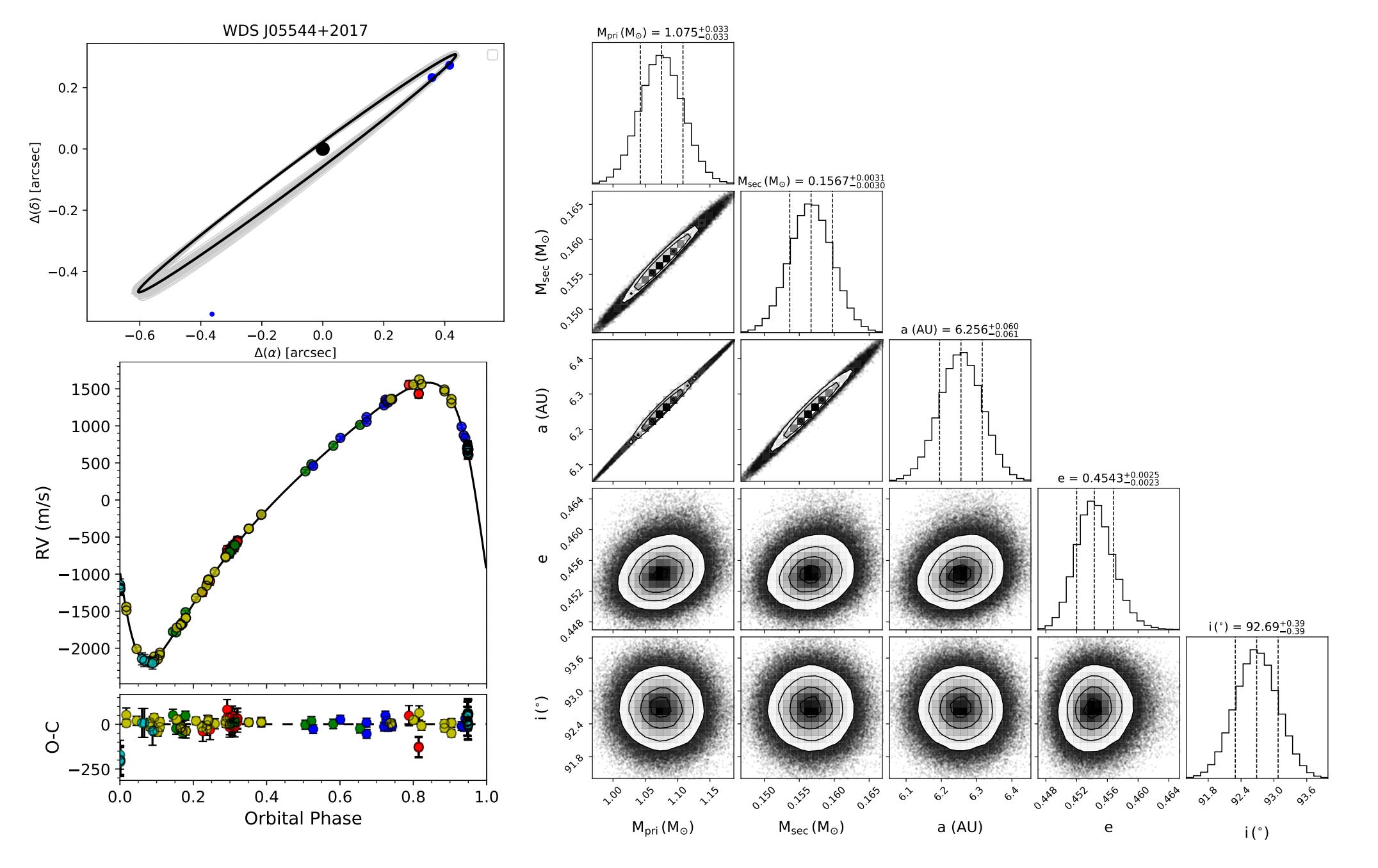
The authors end up with a list of 215 stars and brown dwarfs in 92 systems. One third of these systems have more than two components.
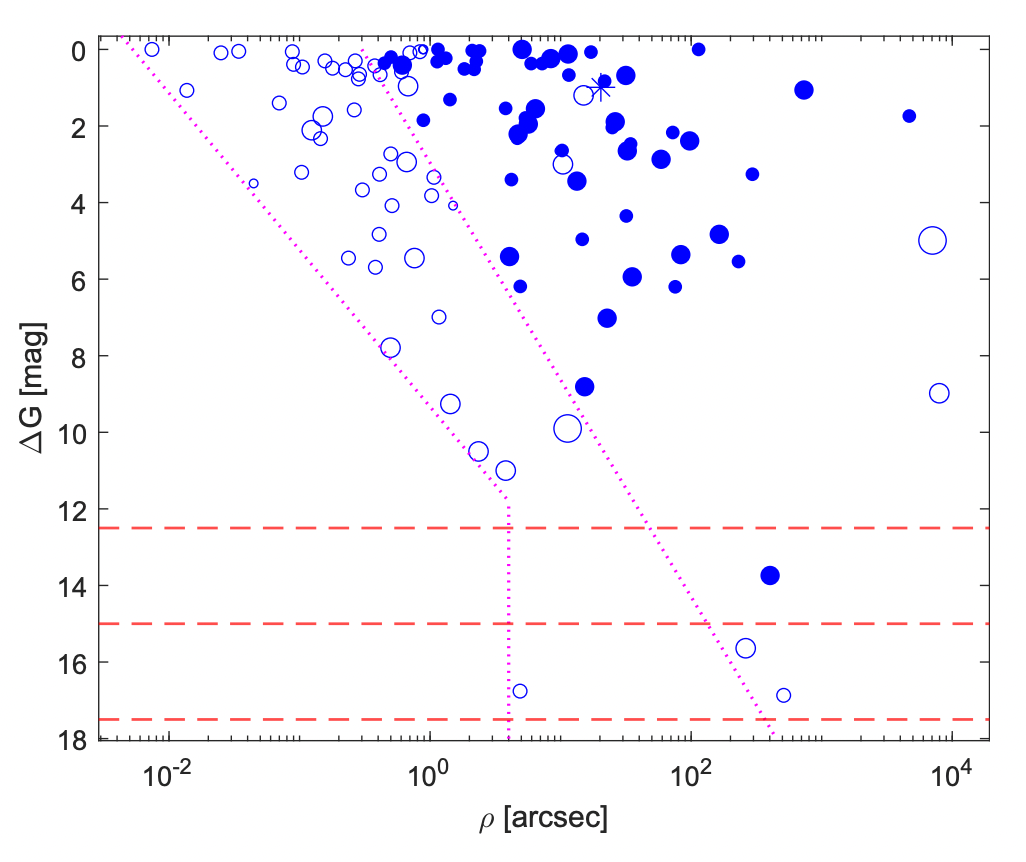
They also analyse the detection bias due to the difference in brightness between the components and their angular separation.
This work is a massive effort to put together a lot of data from different sources and provide a catalogue which can have a great utility in the study of binary (and multiple) systems. It is possible that it will become an important reference for the study of nearby binaries with upcoming high spatial resolution projects.
🤖🖥AI in Astronomy
Artificial Intelligence is entering all aspects of our lives. In this section, we try to share useful prompts, use cases, and reflections which may help you using AI in a constructive and engaging way.
You may or may not remember that, a couple of months ago, I shared this agent: LabClaw
The idea was to have an agent capable of autonomous research.
I don’t know how many people are using agents to help in their research and, if you do, feel free to get in touch.
Two news hit me recently and they seem relevant:
Andrej Karpathy (again!) has shared “autoresearch”; this is an agent which makes hypotheses and verifies them!
HuggingFace (the company which became famous for hosting open source models) has shared the “ML intern” which is an agent capable of reading papers and write code
Both science cases are thought for machine learning research but you probably can see how easy it is to make the step to astronomy (or, in fact, any other science).
📈📊Astronomy tip of the Week
For ages, alchemists tried to transform lead into gold. Even Isaac Newton, one of the noble fathers of modern science, spent a significant part of his life in this effort.
Newton could not know that changing the nucleus of an atom is very very hard.
So, how do you get helium from hydrogen? It seems to be a very trivial phenomenon since it happens in most stars, including our own Sun.
You only need five ingredients: 4 nuclei of hydrogen and a lot of pressure.
To put it in context, my legendary tiramisù has the same amount of ingredients (eggs, sugar, mascarpone, coffee and cacao powder).
Everything goes back to a funny property of the neutron. It is not a stable particle. In other words, a neutron, instead of being a neutron forever, will happily transform to a proton... releasing an electron, a funny small neutral particle, and some energy.
The “funny small neutral particle” appears naturally once you put together the numbers. Actually, it is an antiparticle. It was predicted by Wolfgang Pauli. Enrico Fermi, half-jokingly, called it as a small neutron: “neutrino”.
The process of transformation of the neutron is the so-called β-decay and, according to the legend, the whole theory was devised by Enrico Fermi in an afternoon.
The formula is:
p -> n + e + ν + γ
Let’s go back to our four hydrogen nuclei. We are squeezing them together and it turns out that two of the four protons really do not like the party: they turn in neutrons. For each of these two neutrons, we get an electron, an antineutrino, and a photon.
Here is how it looks in a very easy to read formula:
4 H -> 2 He + 2e + 2ν + 2 γ
This is the basics of what happens inside a star.
🫣❓What is on the horizon?
Big conferences, big news or big events.
EAS 2026, Lausanne (Switzerland), 29 June - 3 July 2026
XVII Scientific Meeting of the Spanish Astronomical Society, Tarragona (Spain), 13-17 July 2026
Understanding the Universe Through Large Scale Astronomical Surveys, Teruel (Spain), 5-9, October, 2026
With the 20th anniversary of Pluto's reclassification fast and approaching and now NASA getting involved, I can foresee a lot of pressure building on the IAU again. Personally, I don't see the IAU budging, but there's always the possibility of a presidential executive order coming to reclassify Pluto the same way that EOs renamed the Gulf of Mexico and Mt. Denali. The summer could be interesting!